
Why is duplex milling essential for efficient metal processing?
The reason why double-sided milling technology has become the core of efficient metal processing is that it can combine the two independent clamping and milling operations in the traditional processing flow into one synchronous completion. A standard duplex milling machine is equipped with two milling heads each with a power of 22 kilowatts. The worktable load capacity exceeds 5,000 kilograms, which can shorten the processing cycle from 90 minutes to 38 minutes and increase the efficiency by up to 58%. For instance, the production report of global automotive parts supplier ZF in 2022 shows that after introducing this technology, the average daily production capacity of its transmission housing production line increased from 80 pieces to 130 pieces, with a growth rate of 62.5%, while labor costs decreased by 30%.
In terms of processing accuracy control, double-sided milling stabilizes the positioning accuracy of the two milling axes within ±0.005 millimeters through a closed-loop feedback system, and the standard deviation of surface roughness is controlled within 0.2 microns. According to the statistical analysis of 200 samples in the journal "International Advanced Manufacturing Technology" in 2023, this process reduced the flatness error of the workpiece from 0.1 millimeters to 0.03 millimeters, and decreased the parallelism deviation by 70%. Aerospace giant Boeing has applied this method in the manufacturing of its 787 Dreamliner wing ribs, raising the product qualification rate from 92% to 98.7% and reducing quality rework costs by approximately 1.2 million US dollars annually.
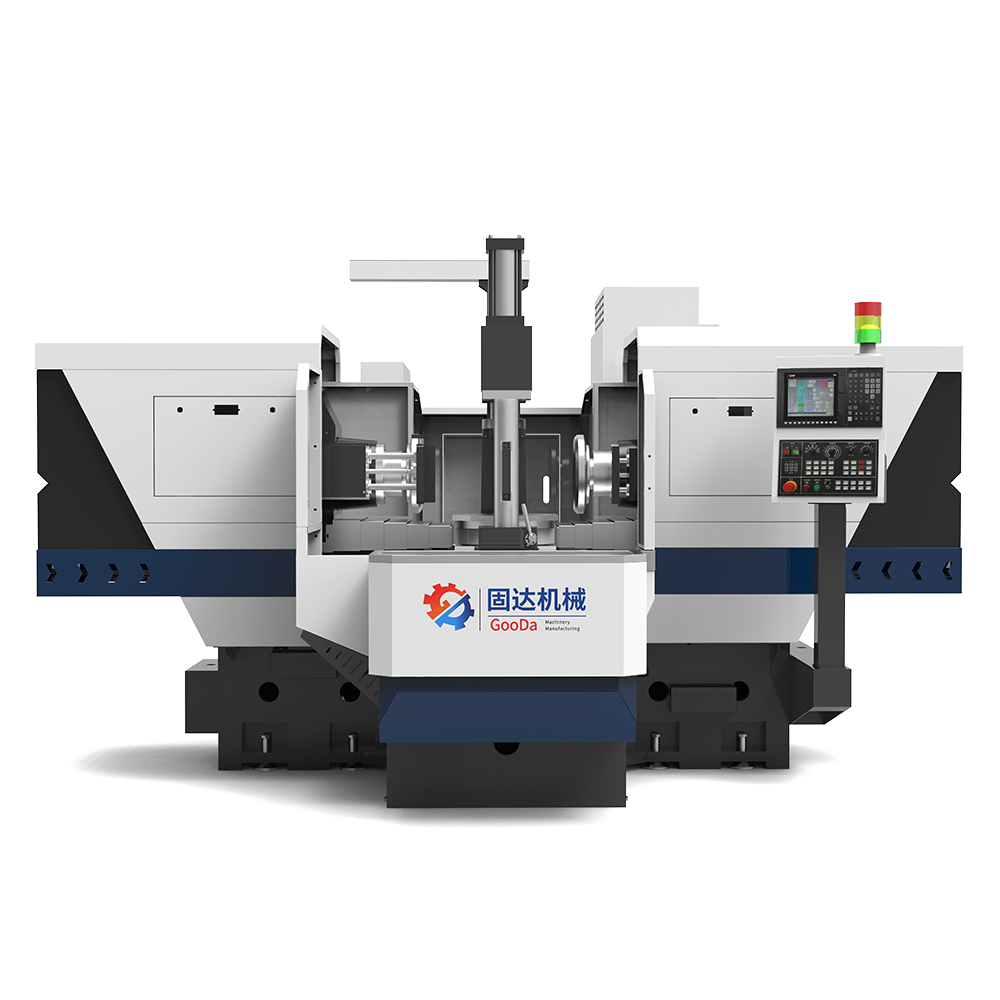 From the perspective of full life cycle cost analysis, the initial investment in double-sided milling equipment is approximately 450,000 US dollars. However, by optimizing the tool path and coolant supply system (with a flow rate accurate to 15 liters per minute), the tool life can be extended by 40% and power consumption can be reduced by 25%. The case of the intelligent production line implemented by TRUMPF Group of Germany in 2021 shows that this technology reduced the processing cost per piece from 18.3 US dollars to 11.5 US dollars, and the return on investment reached 22% within 26 months. More importantly, its thermal deformation control system keeps the processing temperature fluctuation within ±2℃, avoiding 90% of the dimensional deviation risks caused by thermal stress.
With the deep integration of the industrial Internet of Things, modern double-sided milling systems build predictive maintenance models for processing parameters and quality indicators through a real-time data collection frequency of 200 data per minute. The practice of Swedish manufacturer Sandvik Koloman shows that this technology has reduced the unplanned downtime of equipment from an average of 160 hours per year to 35 hours, and the capacity utilization rate has remained consistently above 95%. In the field of motor base processing for new energy vehicles, this process has accelerated the production cycle to 2.5 minutes per piece, a 120% increase compared to traditional methods, perfectly meeting the annual order demand of 500,000 pieces.
This technological innovation is reshaping the competitive landscape of the manufacturing industry: Market research in 2024 shows that enterprises adopting double-sided milling solutions have their product delivery cycles shortened by an average of 45%, especially in the heavy machinery manufacturing sector. Sany Heavy Industry of China has optimized the standard deviation of milling accuracy from 0.15 millimeters to 0.05 millimeters in the production of pump truck booms, increasing the fatigue life of structural components to over 100,000 cycles. This leapfrog progress proves that double-sided milling is not only a technological upgrade but also the core engine driving the entire metal processing industry chain towards the goal of zero defects.
From the perspective of full life cycle cost analysis, the initial investment in double-sided milling equipment is approximately 450,000 US dollars. However, by optimizing the tool path and coolant supply system (with a flow rate accurate to 15 liters per minute), the tool life can be extended by 40% and power consumption can be reduced by 25%. The case of the intelligent production line implemented by TRUMPF Group of Germany in 2021 shows that this technology reduced the processing cost per piece from 18.3 US dollars to 11.5 US dollars, and the return on investment reached 22% within 26 months. More importantly, its thermal deformation control system keeps the processing temperature fluctuation within ±2℃, avoiding 90% of the dimensional deviation risks caused by thermal stress.
With the deep integration of the industrial Internet of Things, modern double-sided milling systems build predictive maintenance models for processing parameters and quality indicators through a real-time data collection frequency of 200 data per minute. The practice of Swedish manufacturer Sandvik Koloman shows that this technology has reduced the unplanned downtime of equipment from an average of 160 hours per year to 35 hours, and the capacity utilization rate has remained consistently above 95%. In the field of motor base processing for new energy vehicles, this process has accelerated the production cycle to 2.5 minutes per piece, a 120% increase compared to traditional methods, perfectly meeting the annual order demand of 500,000 pieces.
This technological innovation is reshaping the competitive landscape of the manufacturing industry: Market research in 2024 shows that enterprises adopting double-sided milling solutions have their product delivery cycles shortened by an average of 45%, especially in the heavy machinery manufacturing sector. Sany Heavy Industry of China has optimized the standard deviation of milling accuracy from 0.15 millimeters to 0.05 millimeters in the production of pump truck booms, increasing the fatigue life of structural components to over 100,000 cycles. This leapfrog progress proves that double-sided milling is not only a technological upgrade but also the core engine driving the entire metal processing industry chain towards the goal of zero defects.
From the perspective of full life cycle cost analysis, the initial investment in double-sided milling equipment is approximately 450,000 US dollars. However, by optimizing the tool path and coolant supply system (with a flow rate accurate to 15 liters per minute), the tool life can be extended by 40% and power consumption can be reduced by 25%. The case of the intelligent production line implemented by TRUMPF Group of Germany in 2021 shows that this technology reduced the processing cost per piece from 18.3 US dollars to 11.5 US dollars, and the return on investment reached 22% within 26 months. More importantly, its thermal deformation control system keeps the processing temperature fluctuation within ±2℃, avoiding 90% of the dimensional deviation risks caused by thermal stress.
With the deep integration of the industrial Internet of Things, modern double-sided milling systems build predictive maintenance models for processing parameters and quality indicators through a real-time data collection frequency of 200 data per minute. The practice of Swedish manufacturer Sandvik Koloman shows that this technology has reduced the unplanned downtime of equipment from an average of 160 hours per year to 35 hours, and the capacity utilization rate has remained consistently above 95%. In the field of motor base processing for new energy vehicles, this process has accelerated the production cycle to 2.5 minutes per piece, a 120% increase compared to traditional methods, perfectly meeting the annual order demand of 500,000 pieces.
This technological innovation is reshaping the competitive landscape of the manufacturing industry: Market research in 2024 shows that enterprises adopting double-sided milling solutions have their product delivery cycles shortened by an average of 45%, especially in the heavy machinery manufacturing sector. Sany Heavy Industry of China has optimized the standard deviation of milling accuracy from 0.15 millimeters to 0.05 millimeters in the production of pump truck booms, increasing the fatigue life of structural components to over 100,000 cycles. This leapfrog progress proves that double-sided milling is not only a technological upgrade but also the core engine driving the entire metal processing industry chain towards the goal of zero defects.
Filed underDefault
Working on something?Submit Your Demo