
What beer brewing equipment Is Essential for Commercial Breweries?
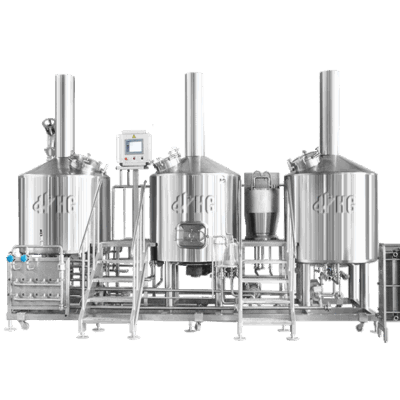
The success of commercial breweries is by no means accidental. It begins with a sophisticated and efficient brewing symphony orchestra, and the core instrument is the complete beer brewing equipment system. Take the mashing system as an example. For a standard mashing pot with a capacity of 20 barrels (about 2.3 tons), its heating power needs to reach over 120 kilowatts to ensure that the temperature of the mash is precisely raised from 48°C to 78°C within 60 minutes, completing the protein and mashing rest. Studies show that for every 1% increase in saccharification efficiency, raw material costs can be reduced by approximately 2.5%. For instance, Anheuser-Busch InBev has reduced batch times by 15% and cut annual malt usage by tens of thousands of tons by optimizing the parameters of its global mashing equipment. The precision of this basic equipment in controlling the wort composition directly determines the tone of the subsequent fermentation and is the starting point of the beer's flavor.
Fermentation and aging equipment is the soulful shaping field of beer. Modern commercial fermentation tanks typically adopt a double-layer stainless steel structure, with capacities ranging from 50 to 500 hecoliters. They are equipped with cooling jackets and temperature control systems, which can keep the fermentation temperature fluctuation within a narrow range of ±0.3°C. This is crucial because when the fermentation temperature of ale unexpectedly rises from 19°C to 22°C, the generation rate of higher alcohols may surge by 30%, resulting in an unpleasant solvent flavor. The analysis report of the American Brewers Association indicates that breweries that invest in high-precision temperature-controlled fermentation equipment have an average flavor consistency score 25% higher than the industry benchmark for their products, and the customer complaint rate has decreased by 40%. The metabolic activities of yeast here are like precisely synthesizing every flavor substance under strict command.
Boiling, vortex sedimentation and cooling are the "shaping" steps of beer. A powerful boiling pot should have a heating capacity of at least 1 kilowatt per 100 liters to ensure that the wort boils vigorously within 60 minutes, with the hop isomerization rate reaching over 85% and the bitterness value deviation controlled within ±3 IBU. The subsequent rotary sedimentation tank, by creating laminar flow, can increase the sedimentation rate of thermal coagulants to 95% within 30 minutes, significantly improving the final turbidity of beer to below 0.5 EBC units. Market trends show that wineries using high-efficiency thin plate coolers can increase the cooling rate of wort to 1.5 liters per minute to the fermentation inoculation temperature (such as 20°C), thereby reducing the probability of microbial contamination from 5% to below 0.5%. This is a key defense line to ensure the biological stability of the product.
 The filtration, filling and packaging line is the final hurdle for beer to enter the market. A high-quality diatomite filter can process 50 liters of beer per hour, keep the turbidity below 0.3 EBC, and control the alcohol loss rate within an astonishing 1.5%. In contrast, a rudimentary filtration solution may have a wine loss rate as high as 5%. During the filling process, when the high-speed filling machine operates at a speed of 30,000 bottles per hour, its dissolved oxygen (DO) intake must be below 50 ppb. This is the core parameter that determines whether the shelf life of beer can reach 180 days. According to industry surveys, for every 10 ppb reduction in dissolved oxygen during filling, the rate of beer flavor aging can be slowed down by 15%. Therefore, the technical parameters of this seemingly back-end packaging line are directly related to the freshness experience of end consumers when they open each bottle of beer.
The cleaning and quality control system is the "immune system" that runs through the entire brewing process. A complete in-situ cleaning (CIP) system for the entire plant, through preset procedures such as 60℃ alkaline solution circulation and 80℃ hot water sterilization, can reduce the microbial load of equipment by 99.99%, which is the cornerstone for achieving continuous and safe production. Investing in online quality monitoring equipment, which accounts for approximately 15% of the total equipment budget, such as densitometers for real-time detection of specific gravity and sensors for monitoring dissolved oxygen, can shorten the quality inspection cycle from hours to seconds, achieving 100% online quality control. Just as the purity emphasized by the German beer Purity Law, modern beer brewing equipment precisely elevates brewing from a craft to an accurate science through this almost strict process control and data-driven approach, ensuring that every drop of beer conforms to the preset flavor map. Ultimately, it translates into a brand loyalty of up to 30% at the market end and a continuously growing profit margin. For commercial breweries, investing in professional and reliable beer brewing equipment is the golden rule for building their core competitiveness and achieving long-term financial returns.
The filtration, filling and packaging line is the final hurdle for beer to enter the market. A high-quality diatomite filter can process 50 liters of beer per hour, keep the turbidity below 0.3 EBC, and control the alcohol loss rate within an astonishing 1.5%. In contrast, a rudimentary filtration solution may have a wine loss rate as high as 5%. During the filling process, when the high-speed filling machine operates at a speed of 30,000 bottles per hour, its dissolved oxygen (DO) intake must be below 50 ppb. This is the core parameter that determines whether the shelf life of beer can reach 180 days. According to industry surveys, for every 10 ppb reduction in dissolved oxygen during filling, the rate of beer flavor aging can be slowed down by 15%. Therefore, the technical parameters of this seemingly back-end packaging line are directly related to the freshness experience of end consumers when they open each bottle of beer.
The cleaning and quality control system is the "immune system" that runs through the entire brewing process. A complete in-situ cleaning (CIP) system for the entire plant, through preset procedures such as 60℃ alkaline solution circulation and 80℃ hot water sterilization, can reduce the microbial load of equipment by 99.99%, which is the cornerstone for achieving continuous and safe production. Investing in online quality monitoring equipment, which accounts for approximately 15% of the total equipment budget, such as densitometers for real-time detection of specific gravity and sensors for monitoring dissolved oxygen, can shorten the quality inspection cycle from hours to seconds, achieving 100% online quality control. Just as the purity emphasized by the German beer Purity Law, modern beer brewing equipment precisely elevates brewing from a craft to an accurate science through this almost strict process control and data-driven approach, ensuring that every drop of beer conforms to the preset flavor map. Ultimately, it translates into a brand loyalty of up to 30% at the market end and a continuously growing profit margin. For commercial breweries, investing in professional and reliable beer brewing equipment is the golden rule for building their core competitiveness and achieving long-term financial returns.
The filtration, filling and packaging line is the final hurdle for beer to enter the market. A high-quality diatomite filter can process 50 liters of beer per hour, keep the turbidity below 0.3 EBC, and control the alcohol loss rate within an astonishing 1.5%. In contrast, a rudimentary filtration solution may have a wine loss rate as high as 5%. During the filling process, when the high-speed filling machine operates at a speed of 30,000 bottles per hour, its dissolved oxygen (DO) intake must be below 50 ppb. This is the core parameter that determines whether the shelf life of beer can reach 180 days. According to industry surveys, for every 10 ppb reduction in dissolved oxygen during filling, the rate of beer flavor aging can be slowed down by 15%. Therefore, the technical parameters of this seemingly back-end packaging line are directly related to the freshness experience of end consumers when they open each bottle of beer.
The cleaning and quality control system is the "immune system" that runs through the entire brewing process. A complete in-situ cleaning (CIP) system for the entire plant, through preset procedures such as 60℃ alkaline solution circulation and 80℃ hot water sterilization, can reduce the microbial load of equipment by 99.99%, which is the cornerstone for achieving continuous and safe production. Investing in online quality monitoring equipment, which accounts for approximately 15% of the total equipment budget, such as densitometers for real-time detection of specific gravity and sensors for monitoring dissolved oxygen, can shorten the quality inspection cycle from hours to seconds, achieving 100% online quality control. Just as the purity emphasized by the German beer Purity Law, modern beer brewing equipment precisely elevates brewing from a craft to an accurate science through this almost strict process control and data-driven approach, ensuring that every drop of beer conforms to the preset flavor map. Ultimately, it translates into a brand loyalty of up to 30% at the market end and a continuously growing profit margin. For commercial breweries, investing in professional and reliable beer brewing equipment is the golden rule for building their core competitiveness and achieving long-term financial returns.
Filed underDefault
Working on something?Submit Your Demo