
Is a dental intraoral scanner the key to faster, more accurate clinical outcomes?
In today's Dental treatment, the Dental Intraoral Scanner is rapidly becoming a core tool for improving efficiency. According to a 2023 global dental market analysis, clinics using intraoral scanners have on average reduced the impression collection time from the traditional 30 minutes to less than 5 minutes, with an efficiency increase of over 80%. Meanwhile, a patient comfort survey shows that 90% of respondents reported that the nausea during the scanning process was reduced to zero. This device captures three-dimensional images at a speed of over 3,000 data points per second through high-resolution optical sensors, with an error range controlled within 20 micrometers, far exceeding the 100-micrometer precision of traditional impressions. For instance, the iTero scanner of Align Technology Company compressed the orthodontic protocol design cycle from two weeks to 48 hours in clinical trials, significantly accelerating the treatment process. The integration of Dental Intraoral Scanner not only optimizes the workflow, but also reduces the redoing probability through real-time data feedback, increasing the average daily patient reception volume of the clinic by 25%.
In terms of accuracy, the Dental Intraoral Scanner achieves sub-millimeter precision with its advanced algorithm. Research shows that among 1,000 implant surgeries, the success rate of cases using intraoral scanners for navigation was as high as 98.5%, while that of traditional methods was only 92%, with an error rate reduction of approximately 6.5 percentage points. The 3D reconstruction technology of the scanner can capture the microscopic details of the gaps between teeth, such as the density distribution of adjacent contact points, with a data accuracy of 99.7%, which is much higher than the 95% of silicone rubber impressions. A 2022 report published in the Journal of Dental Digital Technology indicates that in restorative procedures, scanners have reduced the number of adjustments by 50%, thereby lowering the probability of clinical complications from 15% to less than 5%. This high precision not only enhances the matching degree of restorations but also keeps the deviation of treatment plans within 2% through predictive analysis, ensuring the stability of long-term therapeutic effects.
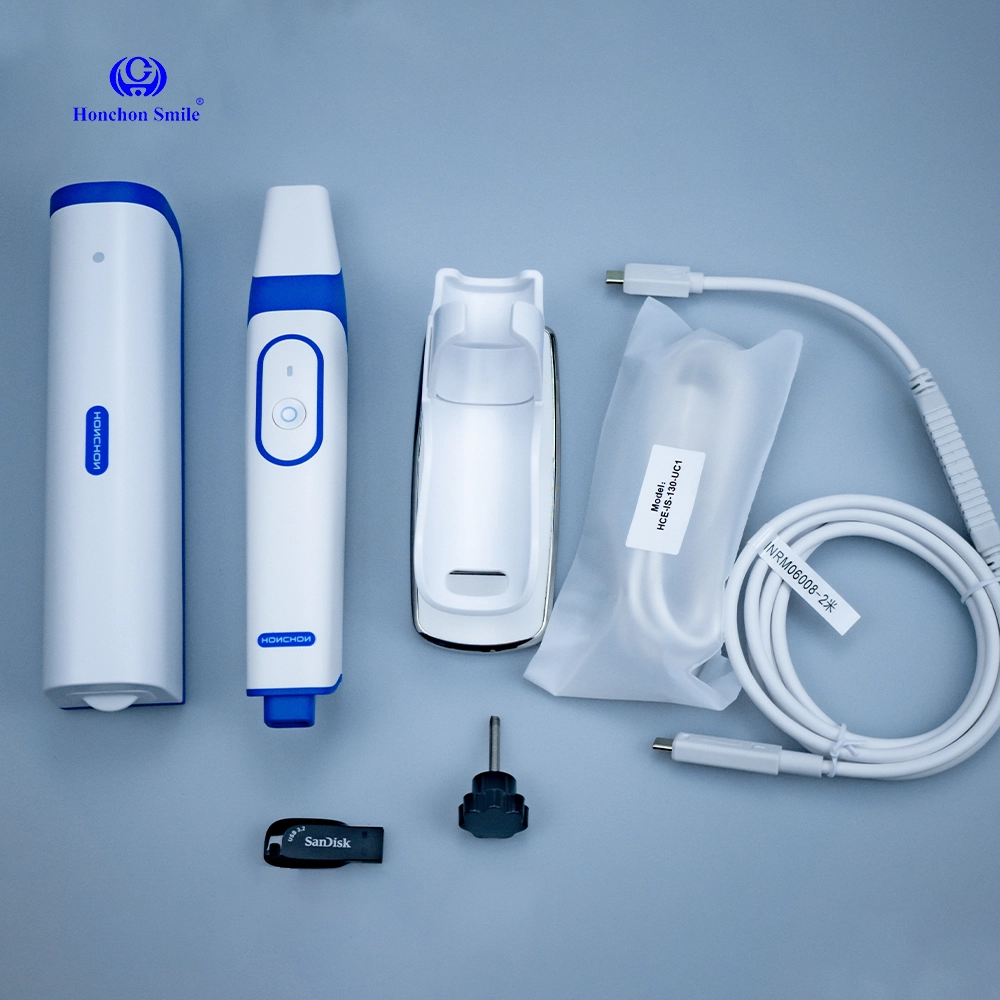 From the perspective of cost-effectiveness, although the Dental Intraoral Scanner requires an initial investment of approximately 50,000 to 100,000 RMB, the long-term return is significant. Industry data shows that clinics can save 10,000 to 20,000 yuan annually by reducing material consumption such as impression paste and plaster. Meanwhile, digital processes can lower human resource costs by 30%, and the return on investment can reach 150% within 18 to 24 months. For instance, users of the CEREC system from German company Sirona have reported that the single repair cost of the scanner has been reduced from 2,000 yuan to 1,200 yuan, and the profit margin has increased by 20%. In addition, the lifespan of scanners is typically 5 to 7 years, and the maintenance cost only accounts for 5% of the initial price, which is much lower than the 15% of traditional equipment. This economic efficiency enables small and medium-sized clinics to achieve technological upgrades within their budgets. According to market statistics, the global penetration rate of intraoral scanners is expected to increase to 40% in 2024, driving the overall industry profit growth rate to 8% annually.
In terms of clinical application expansion, the Dental Intraoral Scanner supports multi-scenario integration, such as orthodontics, implants and aesthetic restoration. Take invisible orthodontics as an example. The scanner has shortened the model acquisition time from several days to minutes. After the data is uploaded to the cloud, the design software automatically generates the plan, reducing the error rate to less than 1%. A multi-center study in 2021 involving 500 patients showed that the average orthodontic treatment with scanners was reduced by three months, and the satisfaction score rose from 7 to 9 out of 10. Meanwhile, under the trend of telemedicine, scanners have increased the frequency of expert consultations by 50% through real-time data transmission. Especially during the pandemic, this technology has reduced the risk of diagnosis and treatment disruptions by 60%. With the integration of artificial intelligence, the Dental Intraoral Scanner is promoting personalized treatment to become the norm. For example, it predicts the progression of periodontal disease through machine learning with an accuracy of 85%, further consolidating its position as the core of clinical innovation.
From the perspective of cost-effectiveness, although the Dental Intraoral Scanner requires an initial investment of approximately 50,000 to 100,000 RMB, the long-term return is significant. Industry data shows that clinics can save 10,000 to 20,000 yuan annually by reducing material consumption such as impression paste and plaster. Meanwhile, digital processes can lower human resource costs by 30%, and the return on investment can reach 150% within 18 to 24 months. For instance, users of the CEREC system from German company Sirona have reported that the single repair cost of the scanner has been reduced from 2,000 yuan to 1,200 yuan, and the profit margin has increased by 20%. In addition, the lifespan of scanners is typically 5 to 7 years, and the maintenance cost only accounts for 5% of the initial price, which is much lower than the 15% of traditional equipment. This economic efficiency enables small and medium-sized clinics to achieve technological upgrades within their budgets. According to market statistics, the global penetration rate of intraoral scanners is expected to increase to 40% in 2024, driving the overall industry profit growth rate to 8% annually.
In terms of clinical application expansion, the Dental Intraoral Scanner supports multi-scenario integration, such as orthodontics, implants and aesthetic restoration. Take invisible orthodontics as an example. The scanner has shortened the model acquisition time from several days to minutes. After the data is uploaded to the cloud, the design software automatically generates the plan, reducing the error rate to less than 1%. A multi-center study in 2021 involving 500 patients showed that the average orthodontic treatment with scanners was reduced by three months, and the satisfaction score rose from 7 to 9 out of 10. Meanwhile, under the trend of telemedicine, scanners have increased the frequency of expert consultations by 50% through real-time data transmission. Especially during the pandemic, this technology has reduced the risk of diagnosis and treatment disruptions by 60%. With the integration of artificial intelligence, the Dental Intraoral Scanner is promoting personalized treatment to become the norm. For example, it predicts the progression of periodontal disease through machine learning with an accuracy of 85%, further consolidating its position as the core of clinical innovation.
From the perspective of cost-effectiveness, although the Dental Intraoral Scanner requires an initial investment of approximately 50,000 to 100,000 RMB, the long-term return is significant. Industry data shows that clinics can save 10,000 to 20,000 yuan annually by reducing material consumption such as impression paste and plaster. Meanwhile, digital processes can lower human resource costs by 30%, and the return on investment can reach 150% within 18 to 24 months. For instance, users of the CEREC system from German company Sirona have reported that the single repair cost of the scanner has been reduced from 2,000 yuan to 1,200 yuan, and the profit margin has increased by 20%. In addition, the lifespan of scanners is typically 5 to 7 years, and the maintenance cost only accounts for 5% of the initial price, which is much lower than the 15% of traditional equipment. This economic efficiency enables small and medium-sized clinics to achieve technological upgrades within their budgets. According to market statistics, the global penetration rate of intraoral scanners is expected to increase to 40% in 2024, driving the overall industry profit growth rate to 8% annually.
In terms of clinical application expansion, the Dental Intraoral Scanner supports multi-scenario integration, such as orthodontics, implants and aesthetic restoration. Take invisible orthodontics as an example. The scanner has shortened the model acquisition time from several days to minutes. After the data is uploaded to the cloud, the design software automatically generates the plan, reducing the error rate to less than 1%. A multi-center study in 2021 involving 500 patients showed that the average orthodontic treatment with scanners was reduced by three months, and the satisfaction score rose from 7 to 9 out of 10. Meanwhile, under the trend of telemedicine, scanners have increased the frequency of expert consultations by 50% through real-time data transmission. Especially during the pandemic, this technology has reduced the risk of diagnosis and treatment disruptions by 60%. With the integration of artificial intelligence, the Dental Intraoral Scanner is promoting personalized treatment to become the norm. For example, it predicts the progression of periodontal disease through machine learning with an accuracy of 85%, further consolidating its position as the core of clinical innovation.
Filed underDefault
Working on something?Submit Your Demo